Saturday, November 22, 2008

Renior and Life of Today


This week in class we talked about
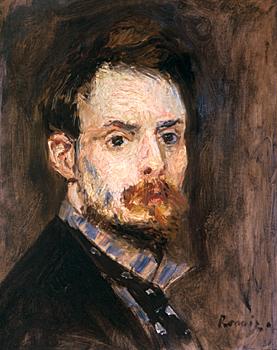
Renoir, one of the most famous impressionist painters in the history of art.  He was in many ways the foil of Degas, another impressionist painting.  Renoir had a very optimistic view of life.  He believed the world was full of happiness and beauty.  Women, to him were the epitome of beauty.  Unlike Degas, who pictured women as specific individuals, Renoir saw women as a symbol.  Every woman he painted was only a variation of a type that he always painted with few slight variations.  He thought women were so beautiful, in fact, that everything else--men, animals, nature--were an accessory to women and their beauty.  
This is often how women are seen today:  as beautiful but as a symbol or object.  Women are prevalent in the entertainment industry.  However, they are often just seen as pretty things that make a music video or show more alluring to audiences because they are beautiful.  Women are not chosen for spots such as these based on their individuality.

Another part of Renoir was that he went through 3 stages in his art.  When he started, he painted in the classical style with an emphasis on line.  His role models were Ingres and 
Watteau and so his painting was focused neoclassical ideals and frivolity.  Later, he met Monet and the impressionists.   They had a profound impact on his painting.  He was impressed by their rejection of convention and use of freedom of expression.  He soon started to paint in the impressionist style.  After a while, Renoir thought that he was forgetting how to draw because of the sketch-like method of the impressionists.  In his final stage, Renoir made a return to the classical.  He kept some of the impressionism in the style of his background but began to put more emphasis on line. 

These stages reminded me of the stages that people go through in life.  People start out doing things and acting as their parents told them.  This would be similar to the classical style which was accepted by the Academy, the "parents" of art.  Later, they enter the time in their lives when they want to rebel.  This teen stage of rebellion can be compared to Renoir's impressionist stage in which they rejected the convention of the classical style.  Finally, people get tired of the rebellion and find a medium in which they return to the calmer time in their lives.  This is Renoir's attempt to return to the classical.  

Saturday, October 18, 2008

Nature and Star Wars?


We discussed the German Romantic Landscape artist Friedrich in class this week. He believed art could be a way to bring Germany to where he thought it should be. To Friedrich, art could unite Germany and bring together religion. Friedrich himself grew up in an anti-Catholic and anti-hierarchical household. He thought that people could find God in nature instead. His painting, Monk by the Sea, painted in the 1820s during a time of revolution and restoration in Germany, demonstrated his views. The painting itself has no narrative. Instead, Friedrich makes the viewer feel small in the face of nature by depicting a monk, a religious man already, as very small. Thus, the everyday man would feel even smaller. Nature is where man could find God and salvation.


Although I do not have the same influences as Friedrich, I can understand what he means by saying nature can be an intense experience. When I go to the beach when it is not crowded I get the same feeling of smallness compared to the wide ocean. Especially if I go into the water when there are large waves, I can feel the power of the ocean all around me.


The fact that he thought God could be found in nature also reminded me of my anthropology class. We learned about the different types of religions that are found in the world. Friedrich's idea reminded me of Mana and Animism. Mana is a belief system in which people believe there is a force that is omnipresent and could be used for good or bad (think Star Wars, "the Force"). This reminded me of how Nature would be that all powerful force. It also seemed a little like Animism in which there are spirits in every object around us. Nature is all around us and God is found in Nature.

Saturday, October 11, 2008

Just Milieu in Art and Politics

During class, we talked about the Juste Milieu movement that corresponded to the rule of King Phillipe. He was considered the "King of the People" and was supported from many groups including the Republicans, the Bonapartes (supporters of Napoleon), and the middle class. He was able to do this because he had a policy of compromise in which he was able to satisfy all groups. Likewise, the artistic policy of the time was also somewhat of a compromise. The movement Juste Milieu means ""middle of the road"; it took the best parts of Romanticism and Neoclassicism and combined them into the same work. This type of movement was necessary because of the rise of the Nouveau Riche, or the newly rich. These people were not cultured and did not know history like the other members of the upper class. Thus, artists needed to paint something that was interesting to look at (and so would catch the attention and wallets of the Nouveau Riche) and had an obvious message that was easy to grasp.


This compromise of an artistic movement reminded me of politicians today. Often, they try to go "middle of the road" in order to appeal to the most voters. If they were too radical, on either the left or the right side, they would lose middle of the road voters. Thus, they have to walk a path in the middle while still trying to keep the radical voters happy. This is often very difficult and can be a subject of criticism for many politicians. The success of middle of the road politicians is often dependent on the political atmosphere at the time. If a president or other important political person is being too radical in his policies, the candidates for the next term will often act in reaction to that and try to be more middle of the road, but the opposite can also happen.


Recently, I was watching Fox News and one of its correspondents was commenting on a speech given by Barack Obama to the senate on the financial crisis. As he was wrapping up, he commented that the man behind Obama seemed to look sleepy so this man probably thought Obama "wasn't far enough left" for him. The comment was made to make Obama look bad. However, it made Obama seem more middle of the road and the result for the viewers watching could be good or bad. If they believe a too radical president would be a bad thing, the comment may actually have been in Obama's favor, despite the intentions of the supposedly unbiased news reporter.

Sunday, September 28, 2008


The painting by Gros, a neoclassical artist, called Napoleon visiting the Plague House of Jaffa reminded me of the war in Iraq and the alleged "weapons of mass destruction". Although they are not directly related, the paintings context seemed to be similar to the lies that surrounded the alleged weapons. The paiting depicts Napoleon visting troops in the Middle East who have become very sick. As a transitional piece between Neoclassism and Romanticism, Gros' painting does not idealized the bodies and we see the sickness that has overwhelmed them. Although Napoleon is shown as somewhat Christ-like in his illumination and body position (glove free hand, touching the sick soldier), in reality he was anything but that. He, in fact, lied and instead of saving the soldiers as it seems he was doing, he ordered that they be killed. This painting deceived Napoleon's people into thinking he was a savior when he had actually ordered the killing of some of their brothers, fathers, and sons.

Napoleon's lies to his soldiers reminded me of the President Bush administration's fervent claim of "weapons of mass destruction". After invasion, no weapons were ever found. Instead of finding and destroying the weapons and freeing the Iraqi people, our soldiers went in with a false objective because of the lies that the government told the American people. President Bush misled the American people and soldiers just as Napoleon did his soldiers.

Saturday, September 20, 2008

Propaganda

One of the artists we talked about in class was Jacques-Louis David, a French Neoclassical painter. One of his paintings was Napoleon Crossing the Alps. Created in 1800, it was a picture of Napoleon on his horse looking confident and in control. The combination of the horse and Napoleon dominate the painting, making Napoleon seem larger than his small stature. The horse looks crazed with fear which contrasts with Napoleon's calm expression. Riding the animal, David portrays Napoleon as a strong leader, only holding on by one hand, the other up in the air as a sign of confidence.

Obviously, Napoleon
understood the potential art could have in creating a positive view of himself in the eyes of his people. He used this portrait by David as propaganda to make people believe he was a strong and powerful leader with no fear. In reality, Napoleon was short, riding a sturdy but ordinary mule up the mountains. That picture, David realized, would have been less than inspirational. Instead he used his skill as a painter to create an alternate image that displayed Napoleon's journey in a more positive light.

Propaganda like this has been used throughout history by the government, politi
cians, and many others who have wanted to make their audience believe or feel a certain way. Aritists often partake in propaganda during times of war when national support is most important and in politics. This image of a Time magazine cover with President Bush giving a "thumbs up" sign with the caption "Bush Resigns: The Nightmare is Over" is an example of political propaganda. The message is obviously trying to get viewers to see Bush as someone stupid (the "thumbs up" sign even as the cover hails his resignation) and monstrous (use of the word "nightmare").

Both images, one from the beginning of the nineteenth century and the other from the twenty-first, although different in medium and subject, both serve the same purpose: to make viewers believe the message they put forth as true.

Wednesday, September 10, 2008

Art: Then and Now

In Academicism, only art that had come from those that had been through school was important. This idea reminded me of a television program So You Think You Can Dance?, a show that gives everyone from every kind of background a chance to show their artistic ability to the world. People often think that one must go to school in order to be a good dancer, just as the idea of Academicism believed only. However, the judges on the show frequently choose dancers that have also not had any classical training at all. These often turn out to be some of the best dancers because they have such a strong natural talent. In fact, the finalists of the last season were both untrained dancers. It is sad to me that Academicism was such a powerful idea in the 1700s because there were probably many wonderfully talented artists who were not appreciated or even given a change to express their creativity because they did not go to school.

Also on the show, dancers have certain genres in which they are particularly inclined to dance in. Just recently, they have had such styles as Crumping and Popping on the show which are relatively new and very different than classical styles such as Jazz and Lyrical.


Many people did not (and some still don't) consider the former styles of dance as sophisticated as latter ones. This prejudice reminded me of the disagreement between the Poussinistes and the Rubenistes, two groups that had opposing views in what made a great painting: drawing or color.

The Poussinistes, named after Nicolas Poussin, believed that drawing was more important because it "appealed to the mind" where color "appealed to the senses". ------------------------>

Rubenistes, named after Peter Ruben, however, believed that color, because it was able to "deceive the eye" better than drawing could, was more important.
(below)


Only the Poussinistes' style was acceptable by the French Academy, much like how the "classical" styles of dance are more accepted in the dance world today.

Saturday, September 6, 2008

Me in Pictures

I chose the Apple logo for a couple reasons. The first and most obvious is that I work for Apple! I work at the retail store in Valley Fair mall as a Concierge. Thus, I have a lot invested, figuratively and literally, in the company. But, beyond that, I really love and believe in their values. My job and my superiors are always trying to inspire us to work harder for customers, express our ideas, and enrich our lives as well as our customers. I've also met some really great and unique people from different backgrounds and different places around the world working at the store and many have become really good friends of mine. Overall, Apple is a big part of my life!


I chose this mainly because I love comedy and I love to laugh. One of my friends and my favorite places to go is the Comedy Sportz club in downtown San Jose because it's not too expensive (12 bucks for students) and it's a pretty exciting show. I laugh easily and often but it's great to have a place where they compete for your laugh! A sense of humor is one of the most important things to me in a person, maybe even the most important. Without it, life is boring!


I chose the San Jose Sharks logo because I love them (and I am still somewhat partial to the old logo; adding orange seems strange to me)! I love watching hockey and going to games, although I don't get to go anywhere close to as often as I'd like. In my opinion, hockey is one of the most exciting games to watch, on t.v. and in person. Some people like the time between plays in football or between at bats in baseball. I love the constant action (and occasional fights) of hockey. My dad was a Sharks fan mainly because it's a bay area team but I'm the only big hockey fan in my family. A couple of my friends play hockey as well so it's fun to enjoy it with them. Go Sharks!


I chose this because I just started getting into snowboarding and found that it's really fun. I've only been to the mountains about 3 times or so but every time I have a blast. I'm no where near as good as the man depicted in the image I chose but nonetheless I manage to have a great time! My next goal is to save enough to buy my own board and bindings. I'm really excited for this upcoming snow season! I love trying new things whether it's an extreme sport like snowboarding or a new food. I try not to let my fears get in the way!


I chose this picture of Baby Girl Cookies for several reasons! First, I just became an aunt in April and I love my niece more than I can describe! I love being an aunt. Even though her cries can be frustrating when I'm with her at home, every time I have to leave for work or some other obligation, I can't wait to get back to her. Another reason I chose it is because I love food! My friends and I joke about how we bonded because of our mutual love of food. We seem to always congregate around it and these cookies are an example of something we'd love! Thirdly, I am a biology major and one the career paths I am considering is to be a pediatrician. It is kind of a stretch with this picture but it was still a reason why the image describes who I am or who I will be!